1.1.1: Adding value through data science

Welcome to the first post in our brand-new series on data science! If you’re an AI enthusiast, you’ve come to the right place. We’re going to pull back the curtain on how data science is changing the world, and more importantly, how you can be a part of it.
Forget the stereotype of a lone genius crunching impossible equations in a dark room. Today’s data scientist is part of a “diverse tribe,” a team of curious minds from all sorts of backgrounds—from climatology to linguistics!
So, what’s the secret?
It’s not just about being a math whiz. It’s about using data to find answers, spot trends, and help businesses make game-changing decisions.
Let’s dive in.
More Than Numbers: The Heart of a Data Scientist
At its core, data science is about asking interesting questions and telling stories with data.
As Sarah Jarvis, a leader in the field, puts it,
“You can be technically gifted, but if you’re not prepared to dig into what’s going on and be curious, you’ll struggle.”
The demand for these curious minds is exploding. In the UK alone, there’s a massive gap of over 178,000 unfilled data specialist jobs. This has sparked a huge effort to bring in fresh talent from all walks of life, including women and ethnic minority groups, through new pathways like apprenticeships and conversion courses.
The message is clear: You don’t need to be a born mathematician to succeed. You need curiosity, a passion for problem-solving, and the skill to communicate what you find.
Level Up: How Companies Win with “Data Maturity”
Ever wonder how good a company really is with its data?
There’s a term for that: data maturity. Think of it like a video game score for how well a company uses its data, from a beginner level of 0 to a “data champion” level of 100.
A report by BSG and Google found that companies with high data maturity—the data champions—don’t just survive; they thrive. They make more money, grow faster, and build stronger businesses.
This is where data scientists become organisational superheroes. They provide the foresight and predictive power that turns a company from a data beginner into a market leader.
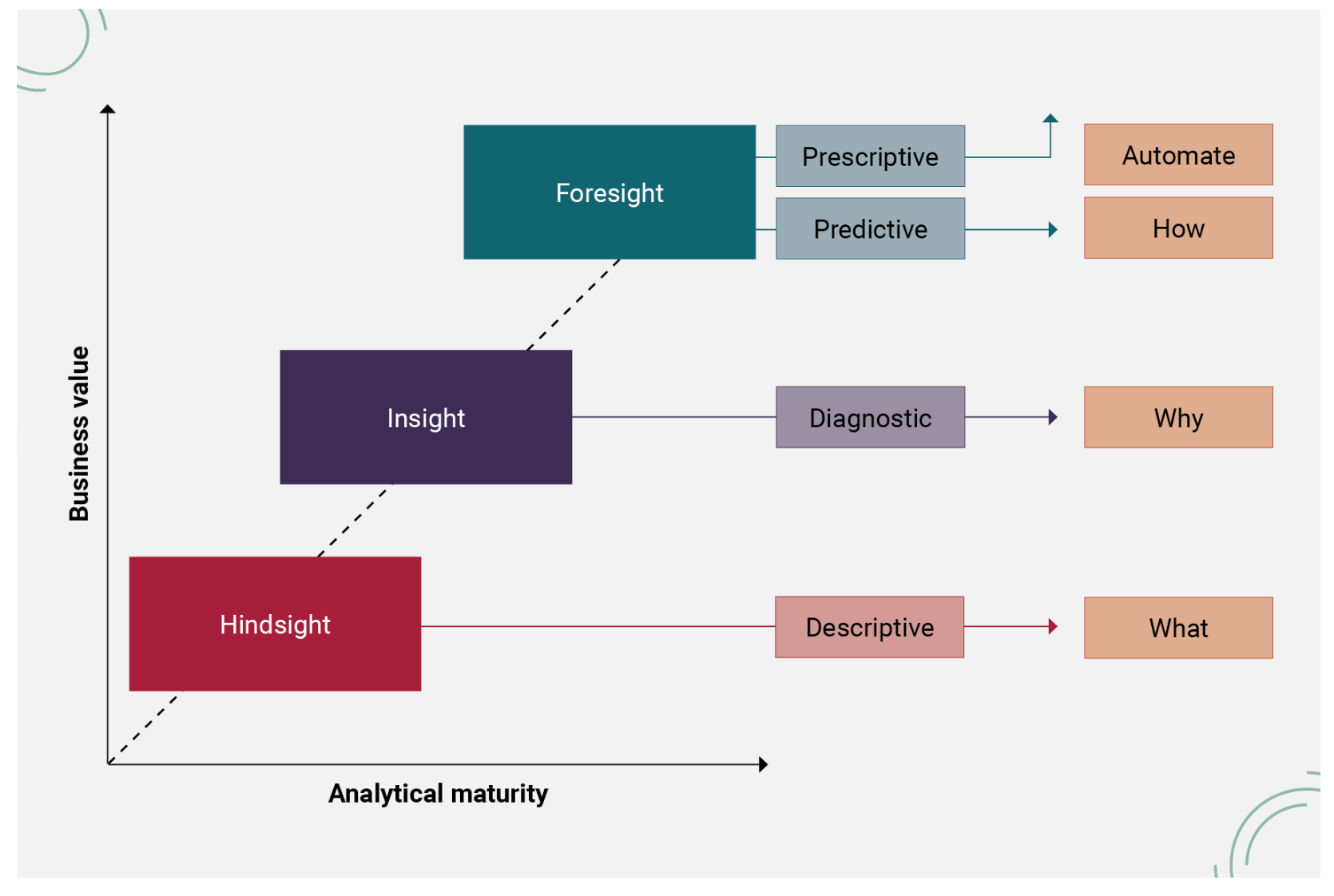
Imagine a simple but powerful chart here. On the horizontal axis, you have “Maturity,” and on the vertical axis, “Business Value.”
An arrow slopes upwards from left to right, showing that as an organisation’s data analysis matures, its business value skyrockets.
The journey starts with Descriptive Analytics (What happened?), moves to Predictive Analytics (What will happen?), and finally reaches Prescriptive Automation (AI) (What should we do?).
This visual makes it clear: better data skills lead to bigger rewards.
Exploring the data science project life cycle
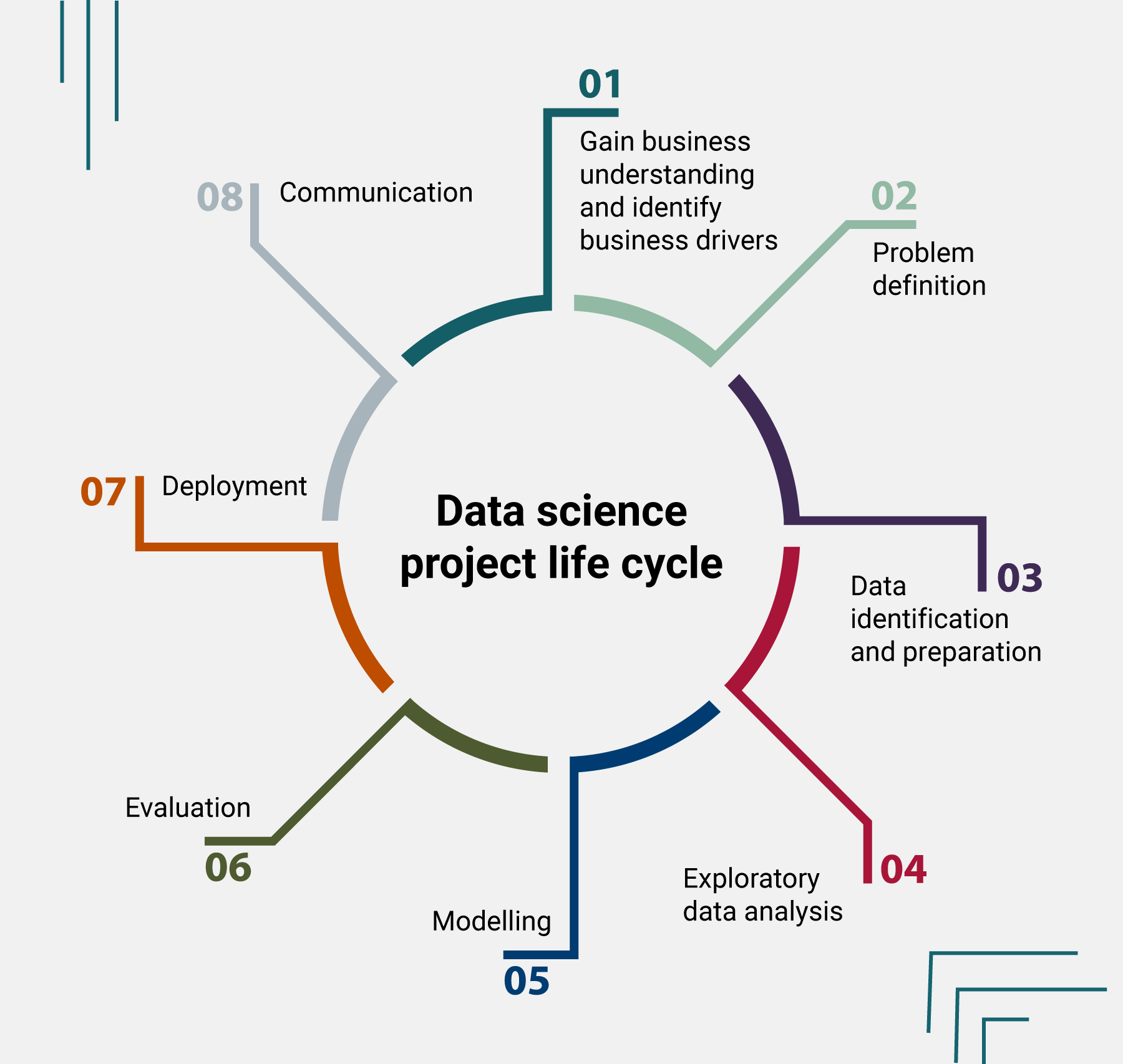
The Blueprint for Success: The Data Science Project Life Cycle
Successful data science projects don’t happen by accident. They follow a structured plan, a life cycle. While there are a few different models out there (like KDD and SEMMA), one has remained the gold standard for over two decades: CRISP-DM.
Your Secret Weapon: The CRISP-DM Framework
CRISP-DM, which stands for CRoss-Industry Standard Process for Data Mining, is the go-to framework for a few key reasons:
- It’s all about the goal: It keeps the business objectives front and center, ensuring the work actually matters.
- It’s flexible and iterative: You can circle back to earlier steps as you learn more. It’s a cycle, not a straight line!
- It works for anything: No matter the industry or the problem, CRISP-DM can guide the way.
The process has six clear phases:
- Business Understanding: What problem are we trying to solve?
- Data Understanding: What data do we have, and is it any good?
- Data Preparation: Cleaning and shaping the data for modeling (this is where 80% of the work often happens!).
- Modeling: Choosing and applying machine learning algorithms to find patterns.
- Evaluation: Does the model actually work and meet our goals?
- Deployment: Putting the solution to work in the real world.
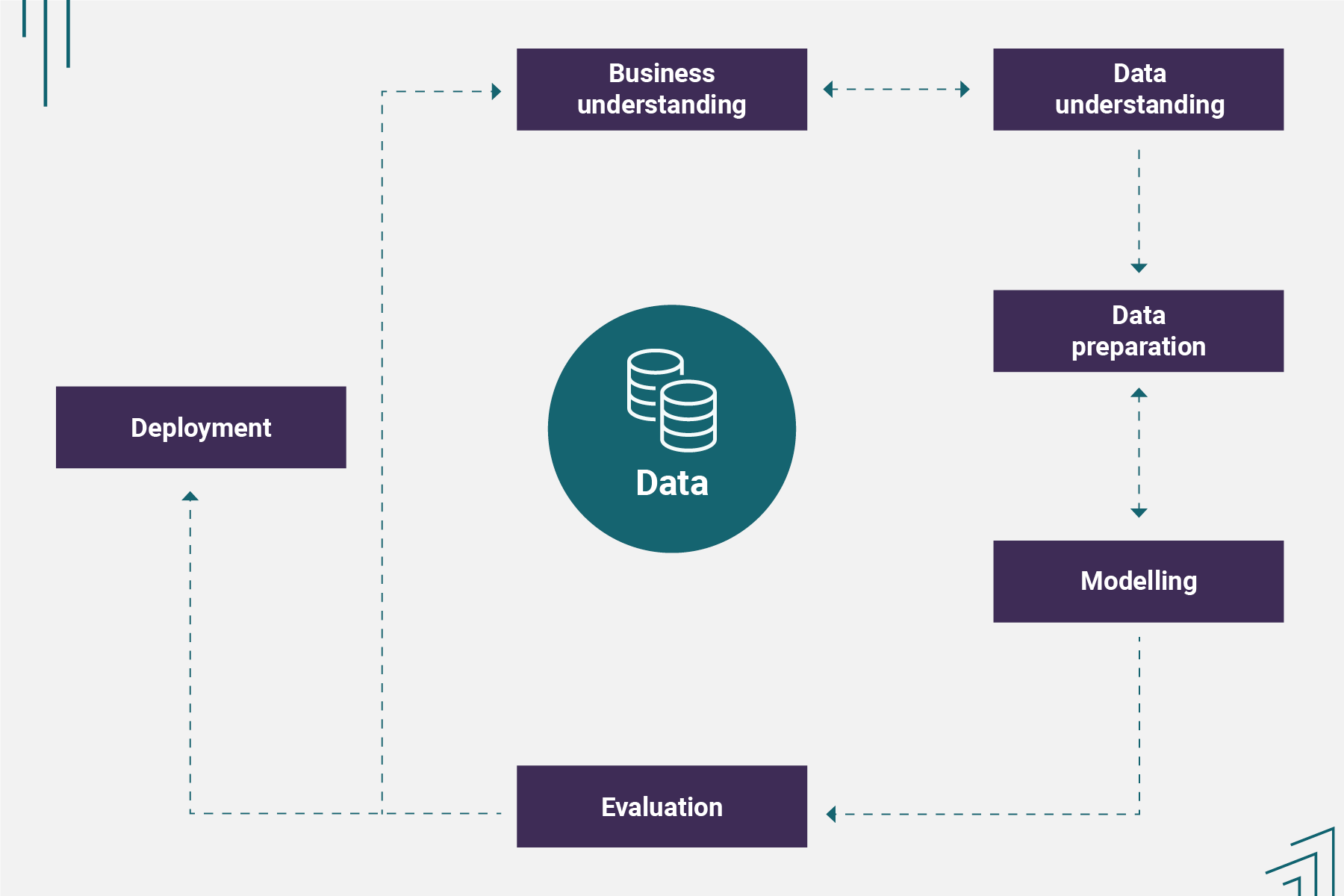
Picture a circular diagram with the six phases listed above arranged in a loop. Arrows show the flow from one phase to the next, but also include arrows pointing backward, highlighting the iterative nature of the process.
For example, after the ‘Modeling’ phase, you might realize you need more data, leading you back to ‘Data Understanding.’ This image perfectly captures the dynamic and cyclical flow of a real-world data science project.
While CRISP-DM is amazing for structuring the work, it’s sometimes criticized for not focusing enough on teamwork. That’s why many teams pair it with collaborative project management methods like Agile to get the best of both worlds.
What’s Next?
You’ve just taken your first step into the structured, value-driven world of data science. We’ve seen that it’s an accessible and exciting field, and with frameworks like CRISP-DM, we have a proven roadmap for success.
In our next post, we’ll dive deep into that crucial first phase: Business Understanding. How do you ask the right questions to kick off a project that delivers real impact?
Stay curious, and get ready to build the future!

 Evangelos Bolofis | The AI Intersection