
In the exhilarating world of machine learning, where breakthroughs happen daily, one truth remains timeless and absolute: the quality of your features dictates the success of your project. As Pedro Domingos, a visionary in Computer Science and Engineering, rightly stated, “Easily the most important factor is the features used.” This isn’t just an observation; it’s a foundational principle that separates triumphant ML initiatives from those that merely tread water.
At its core, feature engineering is the art and science of transforming raw datasets. It’s about strategically adding, removing, combining, or altering variables to profoundly enhance the training of machine learning models. The direct result? Dramatically improved performance, superior accuracy, and models that don’t just predict but truly understand. This alchemy relies on a deep, intuitive grasp of the business problem at hand and an exhaustive knowledge of your available data sources.
Sculpting Data for Superior Performance
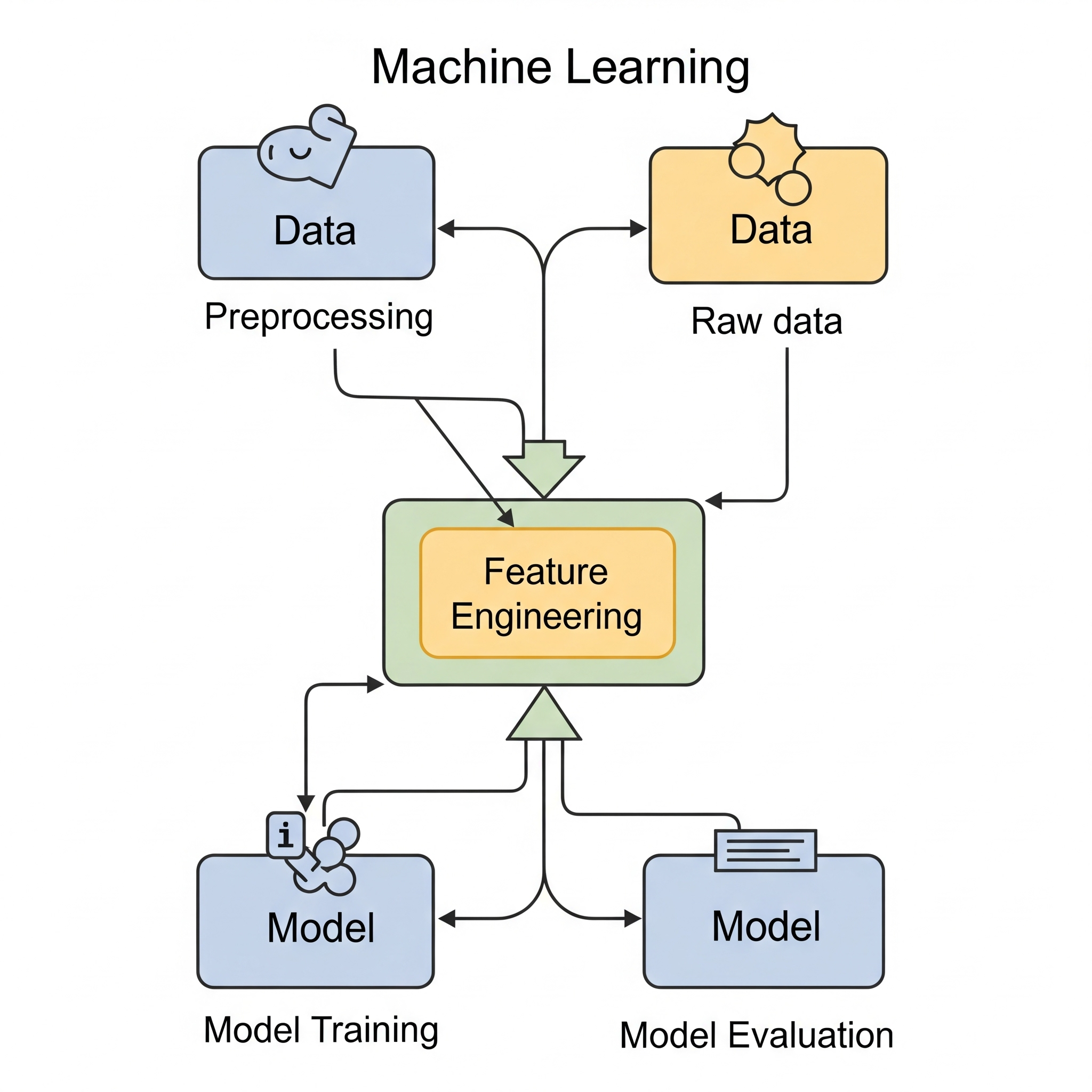
Think of feature engineering as the ultimate data refinement process. It’s akin to a master sculptor reimagining a block of raw marble into a breathtaking work of art. In data science, you’re creatively reshaping your inputs, leveraging invaluable domain knowledge and keen intuition to construct new, more informative, and highly relevant features. These engineered features are the precise inputs your machine learning models crave, allowing them to solve problems with unprecedented accuracy.
Successful feature engineering demands that data scientists recognize a fundamental truth: not all data points are created equal. Certain aspects hold more significance in unraveling a complex problem. This deep understanding of the problem domain allows us to identify hidden patterns, subtle relationships, or profound insights that remain obscured within the original data. It’s about tailoring the data to perfectly align with your problem-solving objectives, ultimately maximizing your capacity to derive meaningful conclusions and make truly informed, impactful decisions.
Here’s why incorporating feature engineering is not just an advantage, but a necessity, for enhancing your machine learning models:
- Flexibility and Simplicity: By crafting features that directly address the problem, you often simplify complex relationships, making models more interpretable and adaptable. This streamlines future iterations and maintenance.
- Better Results with High-Quality Features: It’s simple: better inputs lead to better outputs. High-quality, carefully engineered features directly translate to models that learn more effectively, predict more accurately, and generate more value.
The Creative Edge: Where Human Intuition Meets Machine Intelligence

What makes some machine learning projects truly revolutionary? Often, it’s the seamless collaboration between human expertise and computational power. Feature engineering brilliantly highlights this synergy, echoing how humans solve complex problems in the real world:
- Domain Knowledge: A profound grasp of the problem domain is non-negotiable. Subject matter experts can intuitively identify crucial features or modify existing ones to capture subtle nuances. In medical diagnostics, for instance, experts engineer features that precisely capture specific indicators vital for accurate disease detection.
- Creativity and Intuition: This is where human brilliance truly shines. Feature engineering demands creativity – the ability to intuit and devise innovative ways to represent data. Humans can develop novel features not immediately apparent from raw data, thinking “outside the box” to discover solutions in ways current AI cannot.
- Contextual Understanding: Just as humans consider context, feature engineers must comprehend the problem’s nuances and how various features interact. This understanding empowers them to decide which features to incorporate, discard, or refine for maximum impact.
- Data Interpretation: Human problem-solvers excel at extracting meaning from data. Feature engineering transforms raw data into features that encapsulate the essence of the problem, allowing us to analyze, conclude, and make decisions based on insightful interpretations.
- Iterative Process: Both problem-solving and feature engineering are inherently iterative. They involve trial-and-error, testing various approaches, and refining solutions based on feedback and results. Engineers constantly adjust features and assess model performance, much like humans adapt their strategies based on outcomes.
This powerful collaboration between human intuition and computational methods is the cornerstone of robust data analysis and the creation of truly effective, impactful machine learning models designed to tackle the most complex real-world challenges.
Real-World Impact: Revolutionizing Credit Risk Assessment
Let’s illustrate the transformative power of feature engineering with a practical scenario: credit risk assessment for a major financial institution. Imagine a bank aiming to dramatically improve its model for predicting loan applicant default risk.
By strategically incorporating engineered features, the bank can build a more potent and accurate model to assess an applicant’s creditworthiness. This leads directly to more informed lending decisions and a substantial reduction in default risk, safeguarding both the bank’s assets and its customers’ financial futures.
Here’s how feature engineering creates these game-changing features:
- Credit Utilization Ratio: This vital feature, engineered by dividing a borrower’s current credit card balance by their total credit limit, often flags financial stress. High ratios frequently signal an increased default risk.
- Payment History Features: Instead of a simplistic “good” or “bad” label, we engineer granular features: the number of on-time payments in the last six months, the count of late payments, and the duration since the last delinquency. This provides a nuanced, dynamic view of payment behavior.
- Debt-to-Income Ratio: Created by dividing an applicant’s total monthly debt by their monthly income, a higher ratio can be a crucial indicator of elevated default risk.
- Credit History Length: The mere duration of an applicant’s credit history, engineered as a feature, can signal stability and lower risk – generally, longer histories are preferable.
- Credit Score Interaction Features: Moving beyond individual credit scores, we can engineer interactions between different scores to capture complex relationships and identify potential inconsistencies, revealing deeper insights into financial stability.

These engineered features provide an incredibly rich and detailed view of an applicant’s financial situation, enabling the bank to make smarter, more confident lending decisions and proactively reduce the risk of default. In this context, feature engineering isn’t just a technical task; it’s a powerful problem-solving tool that significantly enhances the effectiveness of the credit risk assessment process, directly serving the wider business objectives of profitability and stability.
Ultimately, by emphasizing invaluable human skills – profound business understanding, critical contextual awareness, deep domain knowledge, and hard-earned experience – in the feature engineering process, we unlock unparalleled creativity and innovation. This leads to revolutionary ways of representing data and capturing complex relationships. This, in turn, empowers algorithms to discover and truly comprehend the underlying patterns and relationships within the data, leading directly to superior results and tangible, impactful outcomes for your organization.
Ready to transform your raw data into a strategic asset? Discover how our advanced data science programs can equip you with the feature engineering expertise to build future-proof machine learning models and drive unprecedented business success.
 Evangelos Bolofis | The AI Intersection