In the vast, interconnected neural networks of modern business, simply having data isn’t enough. We need to know why we’re looking at it. This is where problem analysis comes in – the crucial first step in any successful data science endeavor. It’s about looking beyond the surface, beyond the symptoms, to uncover the true challenges that AI can help us conquer.
The Foundation: Research Questions vs. Problem Statements
Think of your data science journey as a voyage. Before you set sail, you need to define your destination.
- Research Question: This is your compass, asking what you aim to understand or discover.
- Example: “What are the core reasons for customer dissatisfaction and sky-high product returns, and how can we recalibrate our processes and offerings to boost satisfaction and shrink returns?”
- Problem Statement: This is your mission briefing, clearly outlining the issue at hand.
- Example: “Our customer satisfaction scores are plummeting, and product returns are surging, leading to a significant revenue drain. We need to pinpoint the root causes of this dissatisfaction and these returns to deploy targeted improvement strategies.”
The clarity of these statements is your precursor to success. They sculpt your investigative path, guide your algorithmic choices, and ensure your AI-powered solutions are not just innovative, but also practical and impactful. These aren’t just academic exercises; in the hyper-competitive business cosmos, they are vital navigational tools that align your data analysis efforts with overarching business objectives, ensuring every insight generated is a valuable one.
Beyond the Blinders: Deep Dive into Problem Analysis
Imagine a company wrestling with flagging customer service, reflected in dismal feedback scores. Without a rigorous problem analysis, they might impulsively decide to simply expand their customer service fleet.

However, what if a deeper analysis, powered by AI diagnostics, reveals the true culprit isn’t a lack of staff, but an antiquated, inefficient response system? The solution then shifts entirely, from human expansion to technological revolution.
Problem analysis in the business realm is the art of distinguishing between the surface ripples and the deep, underlying currents. A dip in customer retention, for instance, could stem from a constellation of factors: product quality, pricing algorithms, customer service protocols, or even shifts in competitor strategies. Effective problem analysis, augmented by AI’s pattern recognition, peels back these layers, ensuring that your data science resources are precisely targeted at the actual issues.
The Blueprint: Steps in Problem Analysis
A meticulously crafted problem statement acts as your navigational beacon for data analysis. It transcends merely stating an issue by illuminating its tangible business impact and hinting at the vast ocean of data required to address it.
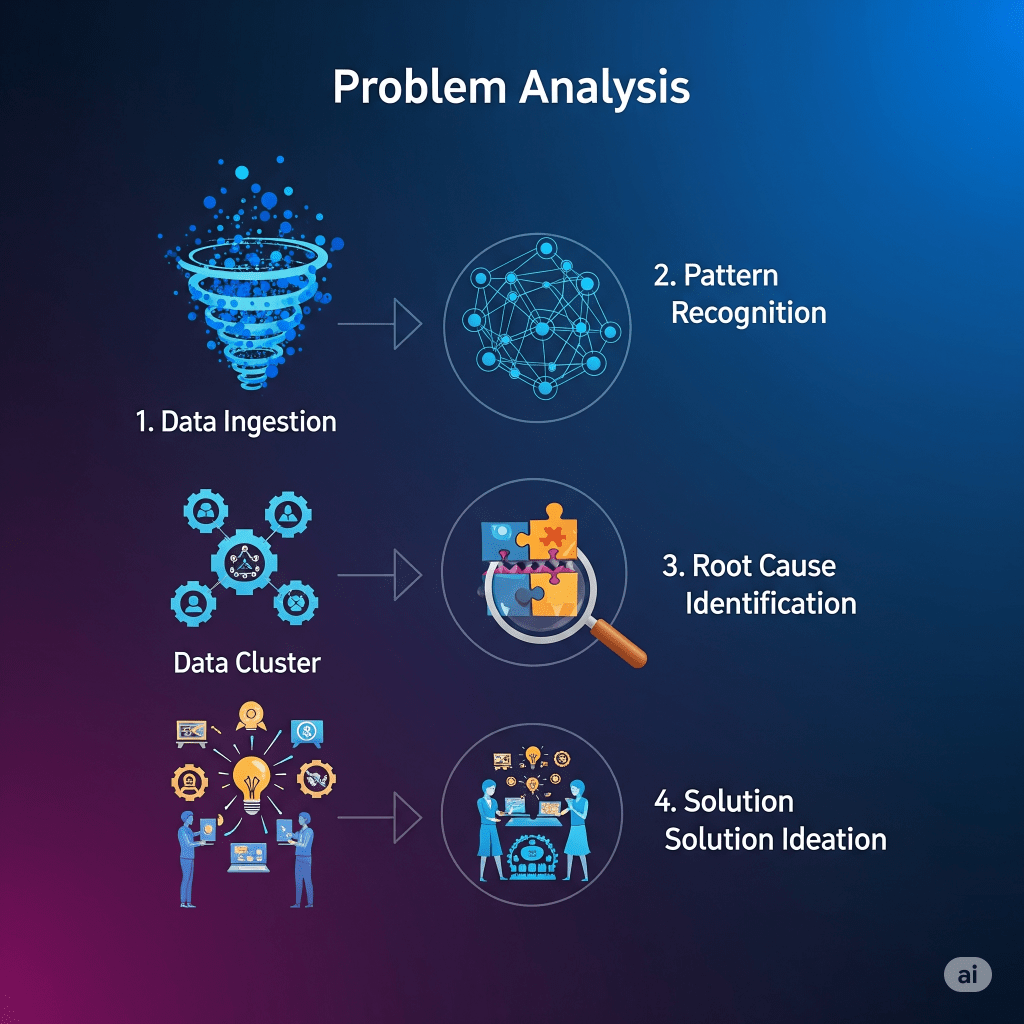
Problem analysis in business data science is a multi-phased journey:
- Define the Symptom: Clearly articulate the observable problem.
- Quantify the Impact: Measure the business consequences of the symptom.
- Brainstorm Potential Causes: Hypothesize the reasons behind the symptom.
- Gather Data: Collect relevant data to validate or invalidate hypotheses.
- Analyze and Validate: Use data science techniques to identify the true root causes.
- Formulate Solutions: Develop strategies to address the root causes.
The “5 Whys” Approach: Unearthing the Digital Roots
The “5 Whys” technique is a potent, almost meditative approach to dissecting cause-and-effect relationships, leading you straight to the heart of a problem. It’s elegantly simple: start with a problem statement, then repeatedly ask “why” it occurred. This iterative questioning, often five times but flexible based on the complexity, continues until the true root cause is unmasked. The “five” is a guideline, not a dogma; it merely suggests we must probe beyond the superficial to bypass symptoms and grasp the authentic origin.
Consider this common business woe: “Our customer churn rate has spiked by 15% in the last fiscal quarter.”
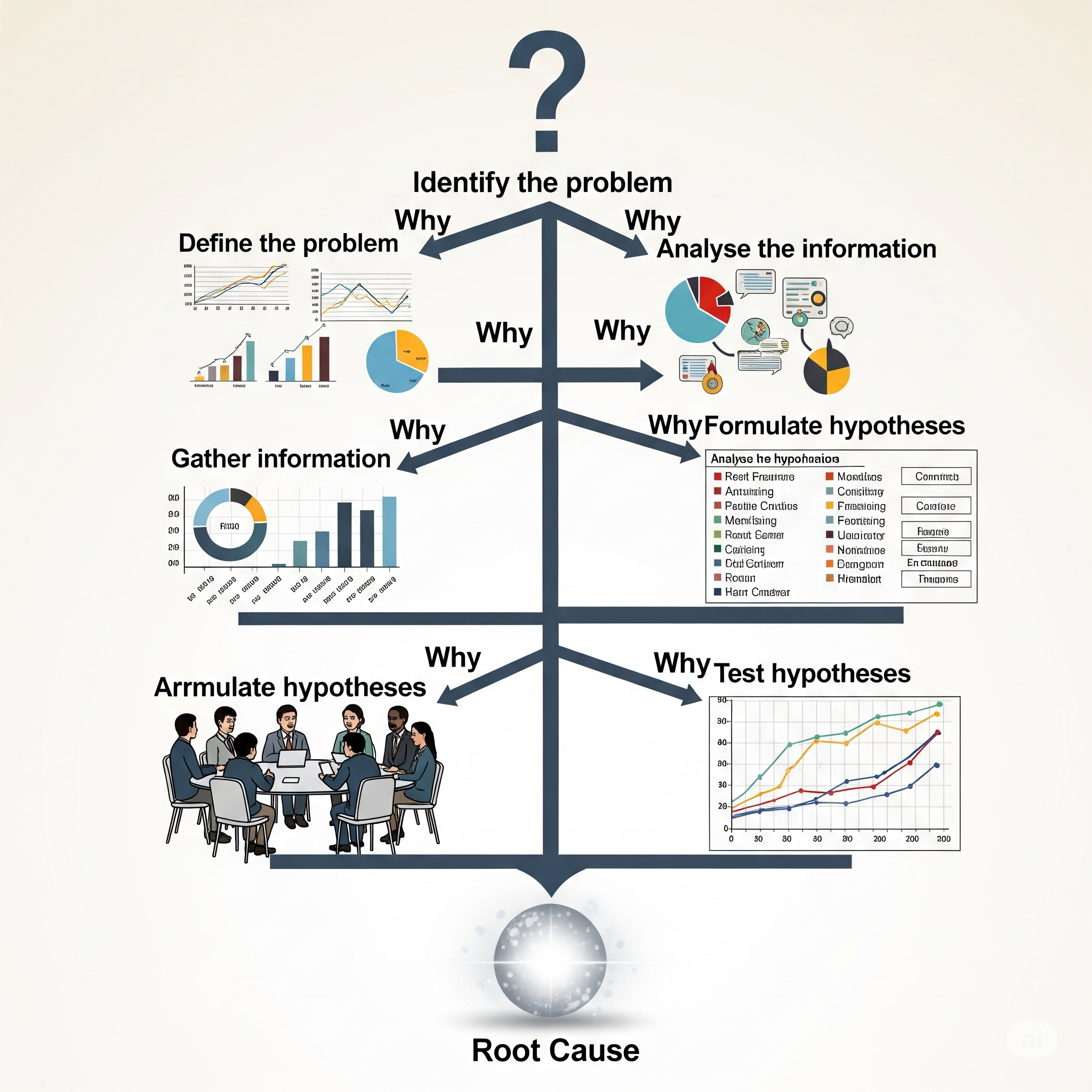
Here’s how a “5 Whys” analysis might unfold:
- Why has the customer churn rate increased? The new product launch has triggered a cascade of customer complaints.
- Why were there numerous customer complaints about the new product? The product was plagued with several technical glitches.
- Why did the product have technical issues? The product was expedited through development and testing to meet an aggressive launch deadline.
- Why was the product rushed through development? The project timeline wasn’t adjusted, despite early warnings of delays.
- Why was the timeline not adjusted? There was a critical communication breakdown between the development team and management regarding the project’s evolving challenges.
Crafting the Future: SMART Research Questions
A high-quality research question is the algorithm that guides your data collection and analysis, ensuring your results are not just data points, but meaningful, actionable insights for your business. It must be focused, measurable, and perfectly synchronized with your business objectives.
To achieve this, we leverage the SMART criteria – a powerful framework for formulating research questions that are clear, precise, and actionable.
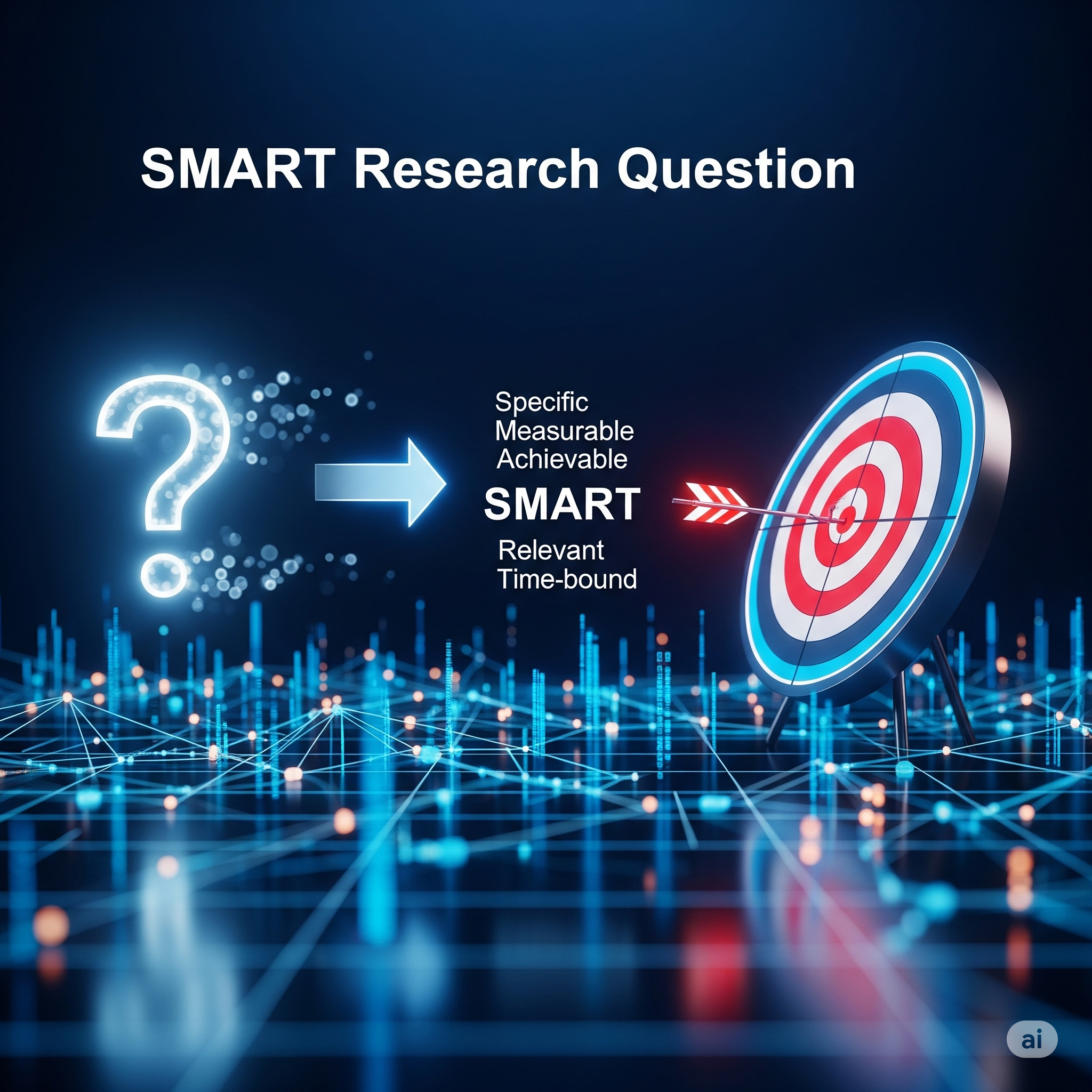
Applying the SMART framework ensures your research questions are impeccably defined and perfectly aligned with business aspirations, dramatically increasing their potential to yield significant, actionable intelligence.
For instance, consider transforming a vague query like “Can we improve customer engagement?” into a truly SMART question:
“How can we increase click-through rates on our digital platforms by 20% within the next six months?”
This transformation embodies the SMART principles: it’s specific about what you aim to achieve, sets measurable targets, ensures the question is achievable with available resources, and is firmly time-bound. This process is not just about asking a question; it’s about engineering the future of your business through data.
 Evangelos Bolofis | The AI Intersection